Concrete floor installation in Cambridge MA - a floor ready for what goes on top
Cracked, damp or sinking floor, or a new room that needs one? We pour interior slabs planned around the flooring you'll lay.
- Fully licensed and insured.
- Free on-site estimates.
- Replies within 1 business day.
What goes into a new concrete floor in Cambridge?
Concrete floor installation in Cambridge means pouring a new interior slab right on the ground, for a basement, garage, addition or outbuilding, and building it to suit the flooring and the use you have planned for the room.
Most calls for a new indoor floor come from someone finishing a basement, replacing a worn-out garage floor or closing in an addition, and nearly everyone asks whether the new slab will crack or let damp through like the old one did. The price moves with the size of the floor, how much digging and base work the ground needs, how hard it is to get concrete into the room and whether moisture protection goes under the slab, which comes down to the flooring you plan to put on top. The schedule turns mostly on the permit and the weather. I measure all of that at your house, and the estimate spells out what's included and what isn't, so you have your own figure instead of a guess.
How do you know your concrete floor needs replacing?
Cracks running every which way
Cracks that wander across the floor instead of following straight lines usually mean the old slab had no joints, or they were cut too late. Water and grit work into them, and over time the edges chip and the flooring on top starts to show it.
Damp spots or a musty smell
Dark patches, white powder on the surface or a basement that smells damp usually means moisture is coming up through the slab from the ground. If you lay new flooring over that without dealing with it, the flooring is usually what fails first.
A floor that's sunk or tipped
A slab that dips in the middle, pulls away from the walls or tips so water runs the wrong way usually sat on a base that was raked level instead of dug out and packed. It keeps moving as long as the ground under it does, and patching the top won't stop that.
How we handle concrete floor installation
Before I price an indoor slab, I ask what's going on top of it, because tile, wood, carpet or a room full of stored boxes changes how we handle moisture underneath. Then we check where water runs around and under the space, dig out the soft material and pack the subgrade, the ground the slab sits on, so the floor doesn't settle with loose dirt later. Where the flooring calls for it, a vapor retarder goes down next. I lay out the control joints, the lines cut into the slab that give shrinkage cracks a planned place to go, before the truck shows up, and we time the pour to the day's weather instead of to whatever's convenient. When a budget gets tight, people usually want to trim the base and keep the nice finish, and I'll steer you the other way, because the base is the part you can't fix later without breaking the floor out.
A new floor often sits next to other concrete work at the same house. If a basement or addition gets a new outside door, the concrete steps up to it usually get rebuilt in the same visit, and if you're also planning work out back, our crew builds concrete pool decks with the same attention to base and drainage.
Slab with a vapor retarder
This suits floors getting tile, wood, carpet or similar flooring, and rooms where you'll store equipment or boxes that don't like damp. The sheet goes under the slab, so it's the one part of the job you can't add later.
Plain slab left bare
This suits a workshop, utility room or storage space where the concrete is the finished floor. We still talk through moisture with you first, because plans for a room change and a slab is hard to redo.
Reinforced slab for heavier use
This suits floors that carry a vehicle, a loaded workbench or heavy shelving. We add rebar, the steel that holds a slab together, and plan the thickness to the load, which costs more up front than a plain slab.
Get a written estimate for your new concrete floor
Send the floor's size, the covering you plan and the season you hope to pour. We reply within one business day to set up a free on-site visit, and there's no obligation to go ahead.
(617) 613-6953- Based in
- Cambridge, MA 02139
- Hours
- Mon–Fri: 7 AM–9 PM, Sat–Sun: 6 AM–9 PM
What happens after you call about a concrete floor in Cambridge?
Here's how a concrete floor job runs on your side, from the first call to the day our crew packs up and leaves.
Call or send us a message
Call (617) 613-6953 or use the form and tell us the floor's size, the covering you plan and when you'd like to pour. We get back to you and set a time for me to come out.
I measure and write it up
I measure the space, ask what's going on top and check how we'll get concrete into the room, then write an estimate that lists what's included and what isn't. That way you know what you're paying for before anything starts.
We handle permits and scheduling
Once you're ready, we sort out any permit with the city and plan the pour around the forecast. If the weather turns, we move the date rather than pour into it.
We pour with me on site
Cambridge allows construction in residential areas from 7 a.m. to 6 p.m. on weekdays and 9 a.m. to 6 p.m. on Saturdays, so our crew works inside those hours, and Sunday or holiday work would need a special permit from the Police Department. I'm on site from the base to the cleanup, and we walk the finished floor with you before we leave.
Why Cambridge homeowners call M&K Cambridge Concrete Company for indoor floors
I'm at every estimate and pour
I come out for every estimate myself, and I'm on site with our crew while the floor goes in. The person who measured your room and wrote your price is the one checking the base and the joints on pour day.
A Cambridge business since 2023
I started as a helper setting forms and pushing wheelbarrows, learned to finish slabs, and opened this business in Cambridge in 2023. Three years on, careful prep and clear quotes are still what people call us for.
Licensed and insured on every job
We're fully licensed and insured. Massachusetts expects a licensed construction supervisor to oversee construction on one- and two-family homes, and anyone bidding on or doing work on an owner-occupied home with one to four units to be registered as a Home Improvement Contractor, so it's fair to ask every contractor who bids about both.
On an indoor floor, the work that counts happens before the concrete arrives, so send the size, the covering you plan and the season you'd like to pour through our contact page or call (617) 613-6953. Satisfaction guaranteed.
Indoor floors, steps and pool decks in Cambridge
In Cambridge, building permits come from the city's Inspectional Services Department, and the city wants one before anyone builds, alters, repairs or demolishes a structure, apart from ordinary repairs. Whether your floor needs one depends on the job, so we check with the city's building office before we schedule anything, and when a permit applies we take it out ourselves as your contractor and keep it posted at the job site where people can see it.
Most of the floors we pour here go into older houses with basements and garages on tight lots, where getting concrete to the room is half the planning, so I look at the route from the street, the headroom and the doorways at the estimate. We see the same kinds of houses on jobs in Somerville and Brookline, and we work across the cities around Cambridge from our base here.
Questions about concrete floors in Cambridge
What does a concrete floor cost around Boston?
Installed concrete slab work around Boston usually runs about $7 to $13 per square foot, and that's the going rate in the area, not our price. Where your floor lands in that range depends on the things covered above, like size, base work, access and moisture protection. I'll give you our figure for your floor once I've measured it.
How do I know if I need a vapor barrier under a concrete floor?
You need one if the floor will be covered with carpet, tile, wood or similar flooring, or if you'll keep moisture-sensitive equipment or products on it, because industry guidance says those slabs need protection from moisture rising out of the ground. The usual answer is a vapor retarder, a sheet laid under the slab. Pouring right onto that sheet can cut down on surface cracking when water evaporates fast, but it can also leave extra water sitting on top that holds up finishing, so we plan the pour and the finishing around it.
Should I test for radon before finishing a basement floor in Cambridge?
Yes, it's worth testing, because the EPA advises testing every home whatever its zone, and its map puts Middlesex County in the highest-potential zone as a county-wide estimate. Testing before the new floor and finished walls go in tells you where you stand while the room is still open.
Can concrete floors be poured in winter in Cambridge?
Yes, concrete placed in cold weather still gains enough strength when it's properly mixed, placed and protected. Concrete industry guidance counts a pour as cold weather work when the air drops to 40°F, or is expected to fall below it, while the concrete is being protected, so a winter pour needs a plan for keeping it warm. We work that plan out with you when we set the date.
How do I keep a new concrete floor from cracking?
Concrete shrinks as it hardens, so cracking is managed with the control joints mentioned above, usually sawn into the slab so cracks form at chosen spots. Timing matters, since those cuts usually go in within 4 to 12 hours after the pour depending on the temperature and the mix, and a late cut can come after the slab has already cracked on its own. A well-packed base underneath does the rest.
Who should take out the building permit for a concrete floor in Cambridge?
Your contractor should, in most cases. Cambridge lets homeowners in one- and two-unit houses take out their own permits, but then you may be liable for contractors on your property and you lose protection under the state's Home Improvement Contractor law, which is why the city encourages having a licensed contractor take it out. As we said above, we take it out ourselves when one applies.
Concrete work that often goes with a new floor
Concrete pool decks
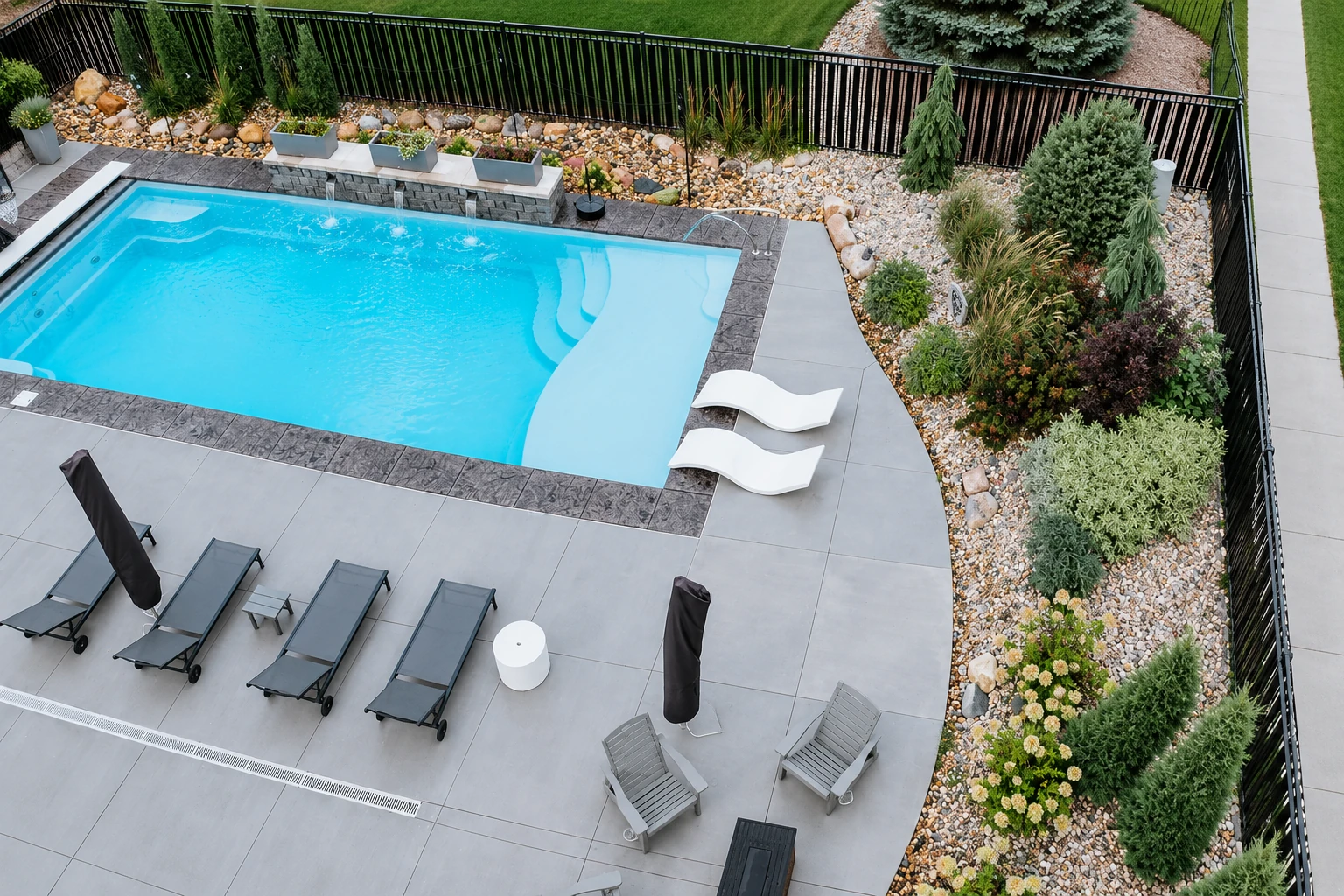
A pool deck needs a surface that grips under wet feet and a slope that carries splash water away from the house and the pool.
Concrete steps construction
When a new floor changes the height at a doorway, new steps keep each rise even so nobody catches a toe going in or out.
Cities where we install concrete floors
M&K Cambridge Concrete Company is based in Cambridge, MA, and we pour indoor floors across the cities around it. The 12 cities below each have their own page, from Newton to Arlington, and if yours isn't listed, call and ask.
Cambridge, MA
Plan your new concrete floor with us
Calling before you order flooring lets us plan the slab around what you'll actually lay on it, instead of the other way round.